Excellent Customer Service
We do our best to make sure our clients receive an exceptional experience with us
Window soundproofing services for homes exposed to traffic and exterior noise. We reduce drafts, vibration, and air gaps through sealing, sash adjustment, and acoustic improvements without full window replacement.
Get a FREE quote
Homeowners usually ask whether soundproof windows are worth it and whether older windows can be improved without full replacement. In many cases, yes. If the frame is still solid, targeted sealing, sash adjustment, glass upgrades, or interior sound-control additions can reduce outside noise significantly. This is especially relevant in the U.S., where homes face everything from dense traffic and construction noise to seasonal expansion and contraction caused by summer heat and winter cold.
Outside noise becomes a real problem when your windows stop doing their job. In most homes, the issue is not just the glass — it is the combination of worn seals, loose sashes, small frame gaps, and aging materials that let sound travel indoors. That is why window soundproofing is often more effective when approached as a repair-focused solution rather than a simple product upgrade.
Another common concern is whether “sound proof” means silence. It does not. Even high-performing sound proof windows are designed to reduce noise, not eliminate it entirely. The goal is to make the home noticeably quieter, more comfortable, and easier to live in every day.
Request a professional evaluation and find out which sound-control option makes sense for your windows
The right approach depends on the age of the window, the type of noise, and the condition of the frame. A house near a busy road needs a different strategy than a bedroom dealing with neighbor noise or wind-driven rattling.
Common service options include:
In many homes, the best results come from combining repair work with acoustic improvement. A loose double-hung window, for example, will never perform well until the sash is stabilized and the gaps are corrected.
Explore the most practical solution for your home before investing in full replacement
Effective sound reduction starts with identifying how noise is getting in. Guesswork usually leads to wasted money and disappointing results.
Inspection
We check the sash, frame, seals, and glass to find the weak points where sound and air are entering.
Problem diagnosis
Not all noise behaves the same way. Street traffic, voices, and low-frequency vibration move through windows differently, so the fix has to match the source.
Recommended solution
Based on the condition of the window, the plan may involve sealing, adjustment, glass improvement, or a combination of services.
Installation and finishing
All work is completed with a focus on tight closure, stable operation, and long-term durability.
In climates across the U.S., temperature swings can reopen weak joints and worn seals. That is why proper prep and installation matter just as much as the materials themselves.
Schedule an inspection and get a repair-based plan built around your actual noise problem
The price of window soundproofing depends on the window condition and the level of noise reduction you are trying to achieve. There is no single flat rate because not every window needs the same level of work.
Main cost factors include:
In many situations, improving the windows you already have costs far less than installing completely new units. That is particularly true when the structure is still in good shape and the main problem is air leakage or loose operation.
Get a detailed estimate based on the condition of your current windows, not a generic price range
From a restoration standpoint, the biggest mistake homeowners make is focusing only on the glass. Glass matters, but sound usually enters through the small failures around it — loose sashes, hardened weatherstripping, frame movement, or poor closure.
That is why many “upgraded” windows still perform poorly in real life. If the unit is not sealed tightly, noise will keep finding a way in. In older homes, especially, restoring operation and tightening the window often makes a bigger difference than people expect.
The best results usually come from treating the whole assembly as a system. Good acoustic performance depends on fit, seal, stability, and the right material choice. That is the difference between a cosmetic upgrade and a solution that actually improves daily comfort.
Talk to a specialist before replacing your windows — a targeted fix may solve more than you think
Contact Artan Window Solutions today to make your home quieter, tighter, and more comfortable without unnecessary replacement
Related read: Read our guide: Best Windows for Noise Reduction in Busy Areas
Related read: More on Acoustic Partitions for Homes & Offices
Related read: Learn more about window soundproofing in Manhattan
Depending on the solution, 50–80% noise reduction is achievable. Laminated glass and secondary glazing offer the best results.
Yes. We provide Landmark-compliant acoustic solutions that preserve your windows’ original look.
How long does window soundproofing take?
Absolutely. We enhance existing windows with secondary glazing and acoustic seals, improving comfort without full replacement.
Yes. In many homes, older windows can be improved with sealing, adjustment, and selective upgrades rather than full replacement.
No. Soundproof windows reduce noise substantially, but no residential system creates total silence.
Not at all. They are also useful near schools, highways, rail lines, commercial areas, and windy neighborhoods where window noise becomes part of daily life.
No. If the frame is sound, repair-based improvements are often the smarter first step.
Yes. Better sealing usually improves not only noise control but also draft reduction and overall energy efficiency.
At Artan Window Solutions, we guarantee quality and provide a warranty on our work.
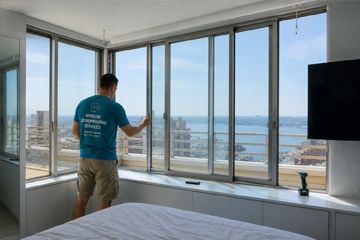
Professional window soundproofing services in Manhattan, NY by Artan Window Solutions. Reduce outside noise, traffic, and drafts with custom acoustic window solutions for apartments, brownstones, and commercial buildings.
If you need services for window glass replacement, high-quality and prompt restoration of transparency and energy efficiency of windows, entrust the work to ARTAN Window Solutions specialists! You can contact us using these contacts and addresses and our specialist will estimate the condition of your windows, will take measurements and prepare a cost calculation right at your home!
If you need high-quality restoration of wooden windows or repairing rotten wood window frames, we will do everything to make you satisfied with the result! Here are our benefits
If you need high-quality restoration of wooden windows or repairing rotten wood window frames, we will do everything to make you satisfied with the result! Here are our benefits
We do our best to make sure our clients receive an exceptional experience with us
With over 8 years of experience, we know how to get the job done right.
We are committed to offering our services to customers at a fair and honest price.
At ARTAN Window works, we guarantee quality and provide a warranty on our work.


















Need window repair, glass replacement, or wood window restoration? Contact our team to discuss your project and schedule an assessment.
3199 Lawson blvd, suite A, Oceanside, NY 11572
PHONE: 516-261-6316
Mon to Fr - 08 AM to 06 PM
Saturday - 10 AM to 03 PM
Sunday - 10 AM to 03 PM