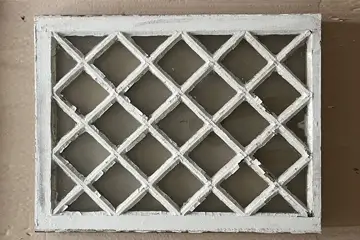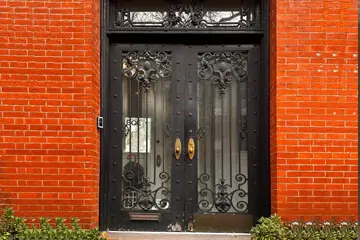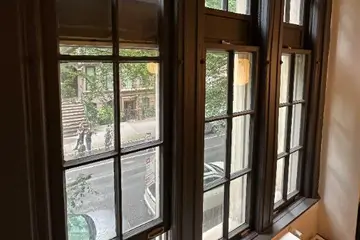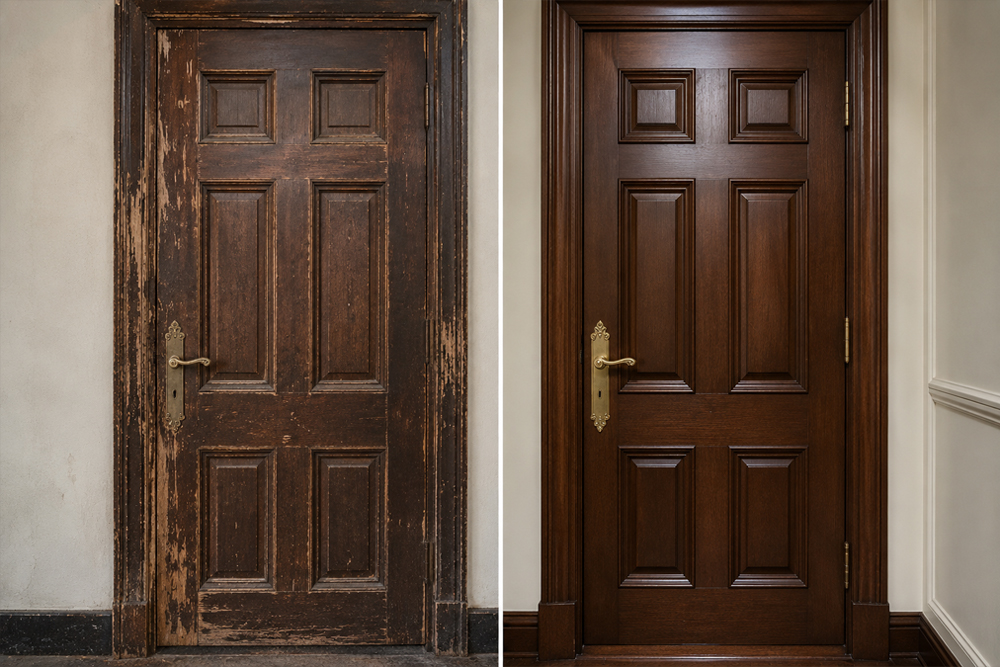
In Manhattan, original entry systems are part of what gives brownstones, pre-war buildings, and townhouses their architectural identity. Many of these solid oak, mahogany, or pine assemblies have been in service for 70 to 100 years, carrying original molding, hand-cut panels, and aged patina that modern replacements cannot reproduce. In historic districts, replacing an original entrance is often far more complicated than restoring what already belongs to the building.
For many Manhattan properties, wood door restoration is not about appearance alone. It is about preserving original materials, protecting property value, and keeping the building visually consistent with its historic facade.
Wood Door Restoration vs Replacement
Many property owners first consider replacement because surface damage can look severe. Paint may be cracked, lower corners may show rot, or the panel may no longer close correctly. But in Manhattan, replacing an original entry often creates more complications than restoration.
In neighborhoods like West Village, Harlem, and Tribeca, many street-facing entrances fall under review by the New York City Landmarks Preservation Commission. Changes to visible exterior elements may require approval.
In most cases, wooden door restoration offers clear advantages:
- Preserves original oak, mahogany, or pine construction
- Keeps original panel proportions and architectural molding
- Maintains historic patina and facade consistency
- Often costs significantly less than full replacement
- Can extend service life for several more decades
When the core structure is still stable, restoration is usually the smarter long-term decision.
Wood Door Restoration Process
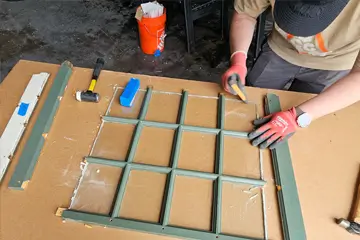
Our wood restoration nyc process follows a detailed sequence designed for historic Manhattan properties.
1. Inspection and estimate
A carpenter inspects structural stability, veneer condition, hinges, lockset wear, panel movement, and moisture damage.
2. Removal and temporary security
The assembly is removed from its hinges, and a temporary secure entry panel is installed when needed.
3. Finish removal
Old lacquer, paint, stain, and failed coatings are removed through controlled stripping and sanding.
4. Structural repair
Areas affected by rot, swelling, or warping are rebuilt using matching materials, epoxy reinforcement, or marine epoxy when structural stabilization is needed.
5. Surface refinishing
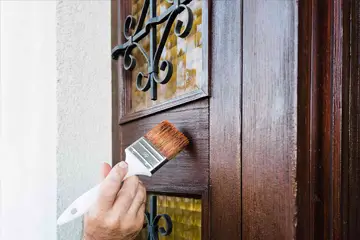
The surface is prepared, sealed, stained, or refinished based on the original appearance.
6. Hardware restoration
Original hinges, locksets, and decorative hardware are restored or replaced with historically appropriate components.
7. Reinstallation
The restored entry is rehung, aligned, and adjusted for smooth daily use.
All visible work is planned with respect for landmark requirements where applicable.
Wooden Door Restoration
We regularly perform wood doors restoration for problems common across Manhattan.
Typical issues include:
- Rot in the lower section caused by winter moisture and street salt
- Swelling and seasonal movement in older entry systems
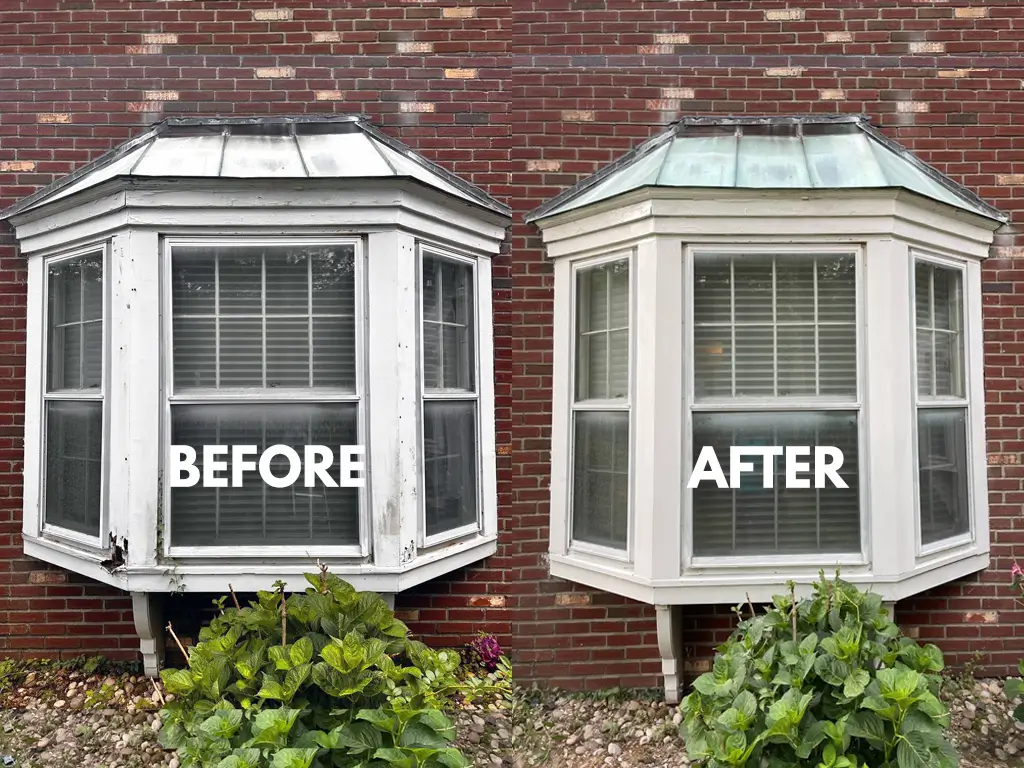
- Cracked paint and peeling finishes on exposed brownstone facades
- Rusted hinges and worn locksets after decades of use
- Loose molding and separated panel joints
- Surface scratches and impact damage on an interior door in co-op apartments
Many of these issues affect appearance first, but eventually begin affecting structural function.
Brownstone Door Restoration
In Manhattan, the front entrance of a brownstone is part of the street itself.
In neighborhoods like Harlem, West Village, and Upper West Side, original facades often include hand-built vestibule entrances, carved trim, decorative panels, and period hardware.
That is why brownstone door restoration matters. Restoring the original entryway protects architectural character, maintains facade consistency, and often increases property value more effectively than installing a modern replacement.
Manhattan Buildings We Work With
We restore original entry systems across the building types that define Manhattan.
In brick buildings across Harlem and West Village, street-facing entrances often serve as the architectural signature of the property.
On the Upper West Side and Upper East Side, pre-war apartment buildings often still have original interior assemblies with historic molding and aging hardware.
In co-op and condominium buildings, we coordinate directly with building management, contractors, and supers when access scheduling is required.
Related read: Commercial glass replacement for homes in Manhattan
Related read: Professional historic window restoration in Manhattan